Track every application and never miss a follow-up
One row per job. Set a next action and date and the tracker flags every application where follow-up is due today. Log when a company replies and the dashboard works out your reply rate and average days to hear back.
- NOMINAL Your data stays in your file
- READY Excel .xlsx, no macros
What it does
Applications
300 rows with company, role, source, work mode, location, salary range, date applied, status, response date, next action and date, contact, link and notes, with days since applied, a follow-up flag and days to response.
Interviews
100 rows with date, type, interviewer, prep notes, questions to ask and outcome. It flags "Soon - prep now" and "Send thank-you".
Contacts
Recruiters and referrers with last contacted and follow-up date.
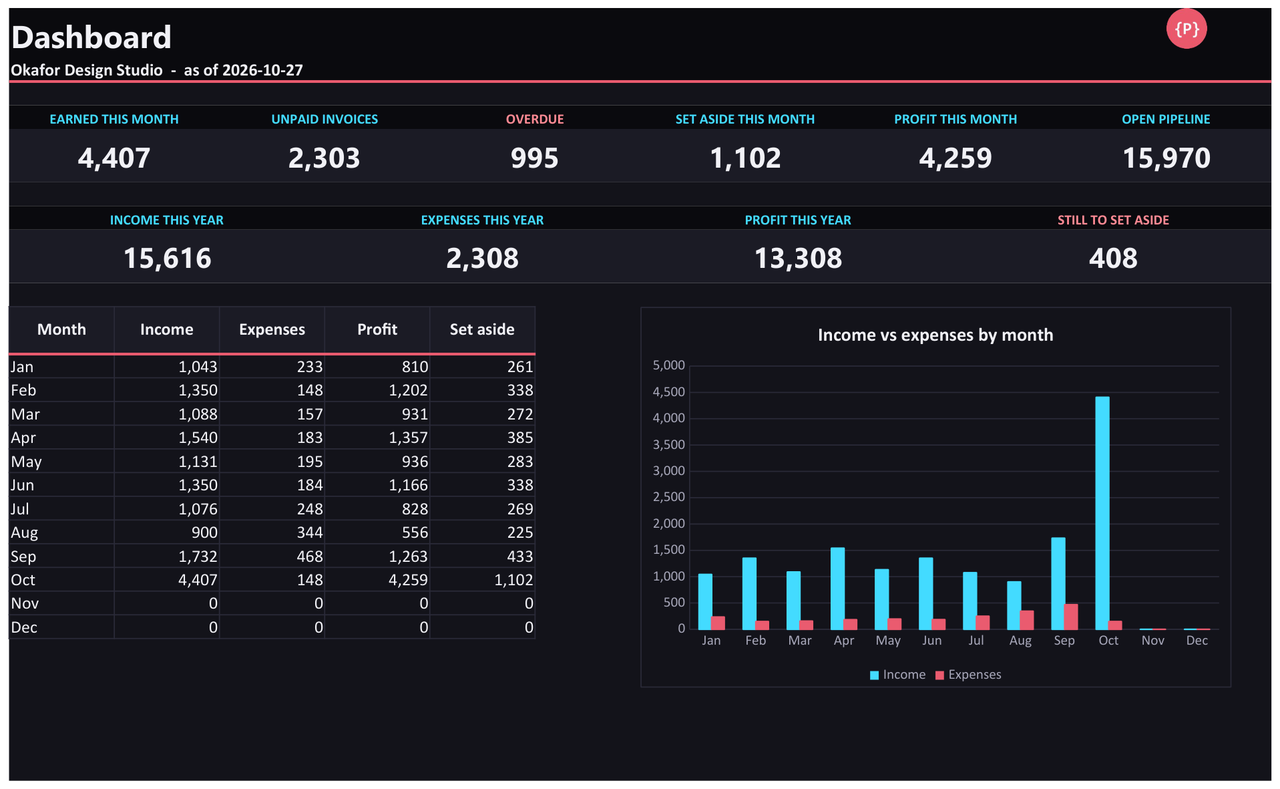
A dashboard
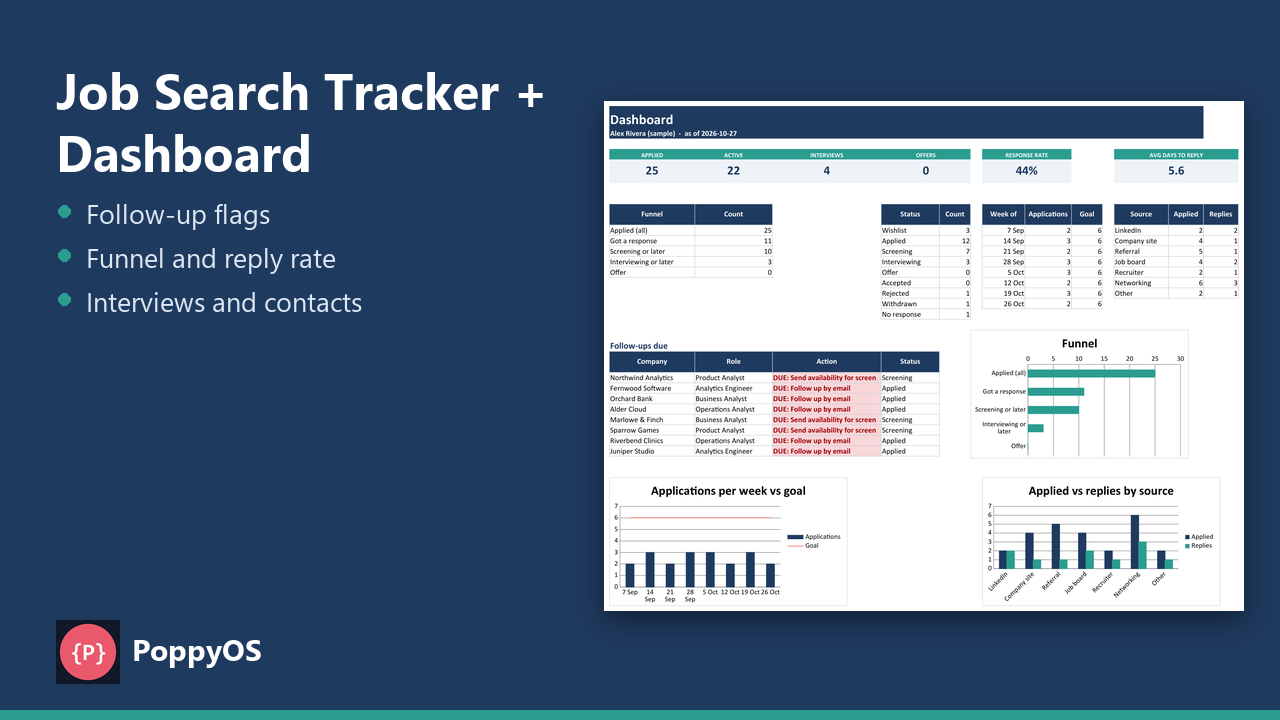
Applied, active, interviews, offers, response rate, average days to reply, a funnel chart, applications per week against your goal, applied against replies by source and a list of follow-ups due.
Who it is for
- Job seekers juggling many applications at once.
- Anyone who wants to see which sources get replies.
- People who want to keep their job-search data in their own file.
Honest limits
- Statuses and sources are lists you can rename on Settings.
- Follow-up flags use today's date, or a date you type on Settings.
- It does not scrape job boards or send emails.
- The formulas were recalculated in LibreOffice with no error values and checked against a separate Python calculation. It has not been opened in Microsoft Excel or Google Sheets, which can import the .xlsx file; check your own copy after import.
Details
- Included: An example workbook with realistic sample data, a blank copy, a README with set-up steps and the limits.
Tested automatically against independent reference implementations. Questions? Support.